
Cream Worktops Beside Encaustic and Victorian Tiled Floors
Patterned encaustic and Victorian geometric floors bring strong colour to a kitchen, so a cream worktop above them should pick up a tile tone and keep its own pattern quiet.
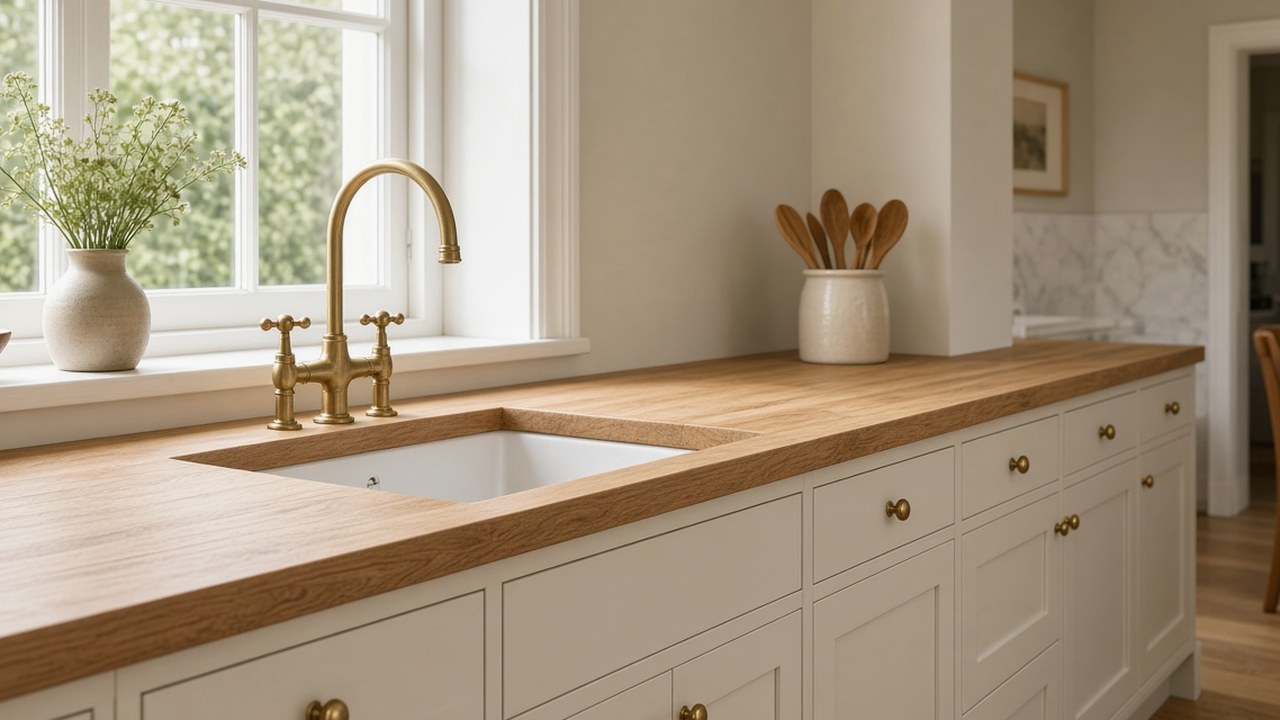
Encaustic cement tiles and Victorian geometric floors are some of the most striking surfaces in a British kitchen. They bring pattern, colour and history to the room, often in reds, blues, ochres and creams. A cream worktop above them should support the floor rather than compete with it. House of Corinth chooses the cream by picking up a tone from the tiles and keeping the worktop's own pattern modest.
Pick up a tone from the tiles
Victorian and encaustic floors usually contain a cream, white or buff tile among the stronger colours. That tile is the natural reference for the worktop. Choose a cream that sits close to it, so the worktop feels related to the floor. A cream that is much whiter or much warmer than the tile cream can look out of place.
Take a spare tile, or photograph the floor in daylight, and compare it directly with worktop samples. If the floor is original, the cream tiles may have aged and warmed. Match the worktop to the floor as it is now, not as it was.
- Use the cream tile in the floor as the reference.
- Compare samples with a real tile in daylight.
- Match aged tiles as they appear now.
Keep the worktop pattern quiet
A patterned floor provides plenty of visual interest. A strongly veined worktop above it can make the room feel busy. A plain cream or finely veined design keeps the focus on the floor. If you love veining, choose a gentle, widely spaced vein that reads as texture rather than pattern.
House of Corinth explains fine veining in fine pattern on a cottage-scale island deck, which applies equally to kitchens with patterned floors.
Consider the cabinet colour as a bridge
The cabinets sit between the floor and the worktop. A cabinet colour that picks up a darker tile tone, such as a deep blue, oxblood or green, ties the room together. The cream worktop then sits above as a calm plane, echoing the lighter tiles.
Test cabinet samples on the floor with the worktop sample on top. The three should look like one scheme, not three separate choices.
- Choose cabinet colours that echo darker tile tones.
- Let the worktop echo the lighter tiles.
- Test all three together on the floor.
Think about the plinth and skirting
Where cabinets meet a patterned floor, the plinth becomes a frame for the tiles. A plinth in the cabinet colour keeps the look continuous. A dark plinth can create a shadow line that makes the floor pattern stand out. Avoid a plinth that is paler than the floor, which can look unfinished.
The skirting should suit the period of the house. In a Victorian kitchen, a simple painted skirting in the wall or cabinet colour is usually best.
Protect tiles during fitting
Encaustic and Victorian tiles can be fragile, especially original ones. During templating and fitting, protect the floor with hardboard or protective sheets. Heavy worktops and tools can crack tiles if dropped. Ask the fitter to take care along the access route.
If the floor is being restored or relaid, plan the order of work. Tiles are usually laid before cabinets, and the finished floor level affects worktop height.
Choose a splashback that respects the floor
With a patterned floor, the splashback should usually be simpler. A matching cream solid surface upstand or plain handmade tiles work well. A patterned splashback as well as a patterned floor can make the room feel overwhelming.
House of Corinth describes how cream worktops relate to period features in linen cream solids beneath period sash window light.
Reclaimed versus new encaustic tiles
Original Victorian tiles often have faded, softened colours and slight wear, while new encaustic tiles tend to be brighter and more uniform. A cream worktop next to reclaimed tiles can be slightly warmer and softer, echoing their aged character. Next to crisp new tiles, a slightly cleaner cream can look fresher.
Take a tile, or a good-quality photograph in daylight, when choosing worktop samples.
- Reclaimed tiles suit softer, warmer creams.
- New tiles suit slightly cleaner creams.
- Compare samples against an actual tile.
Geometric tiles and veined worktops
Many Victorian floors use geometric patterns in terracotta, black, cream and blue. A worktop with strong veining can compete with the geometry. Soft, low-contrast veining lets the floor lead. If your cabinets are painted olive or sage, olive cabinets and cream surfaces shows how the three elements can be balanced.
Hallway tiles running into the kitchen
In some Victorian terraces, hallway tiles continue into the kitchen, or a kitchen extension picks up the hallway pattern. The worktop then forms part of a view from the front door. A calm cream worktop keeps the view coherent.
- Consider the view from the front door.
- Keep the worktop calm.
- Pick up a tile tone.
Cleaning tiles and worktops together
Encaustic tiles may need sealing and gentle cleaning. Worktop cleaning products should not be allowed to drip onto sealed tiles. Use products suitable for each surface.
Plinth heaters and tiled floors
Plinth heaters can be useful in kitchens with cold tiled floors. Plan them in the cabinetry.
Questions about cream worktops with tiled floors
Should my worktop match the cream tiles in my floor?
It should sit close to them so the worktop and floor feel related. An exact match is not necessary.
Can I have a veined worktop with a patterned floor?
Yes, but choose a gentle, widely spaced vein so the room does not feel busy.
How do I protect original tiles during fitting?
Ask the fitter to cover the floor with hardboard or protective sheets and to take care along the access route.
Which cream suits reclaimed Victorian tiles?
A slightly warmer, softer cream usually echoes the aged character of reclaimed tiles.
Should a worktop have strong veining next to geometric tiles?
Soft, low-contrast veining usually works better, letting the floor lead.
Can worktop cleaners damage encaustic tiles?
Some products may not suit sealed tiles. Use suitable products for each surface.
Can a cream upstand sit against a tiled floor border?
Upstands sit against the wall rather than the floor, but choosing a cream that echoes the tile border links the two visually.
Next step with House of Corinth
Order a sample, then request a fitted quote or browse the worktop collection. The colour should be judged in your own daylight before anyone templates the run.